O que nós fazemos
Campbell Scientific’s high-capacity data-acquisition systems (DAQ) have been created with more than 50 years of experience in the design and manufacturing of dam, mining, structural health, and other geotechnical monitoring systems. Campbell Scientific is well recognized for data loggers and DAQs used globally in some of the most extreme and unforgiving environments on Earth. Each DAQ provides accuracy and reliability for critical applications, where human lives are often at stake. Simple interfaces, ease of setup, and long-term reliability make it the preferred choice for service providers in geotechnical monitoring applications.
- Reduce uncertainty. Using automated measurements for data integrity, security, quality control, and local alarming capabilities, our systems are built to reduce your project uncertainty. With VSPECT™ technology your confidence in the sensor and data integrity is increased.
- Make your operations more efficient. Our systems are designed to make your measurement automation setup and long-term operation simple, fast, and worry free.
- Get high performance, no matter the size, with scalability. We offer DAQs to accommodate your needs—from small, single projects to large-scale, multi-site operations.
- Benefit from the flexibility of an open ecosystem. You can own your data; own your network; and control your configuration with capabilities to plug and play, self-configure, and interface with any commercially available sensor, as well as many software platforms, including Oxstone™.
- Share your data. Powerful reporting, dashboard building, and built-in data sharing tools—from cloud software platforms such as Oxstone—keep everyone informed, including your key stakeholders.
Data-acquisition systems are unique to each application because of the many types of measurements they are required to collect.
The versatility, ruggedness, and reliability of Campbell Scientific DAQs make them ideal for all geotechnical monitoring needs, including, but not limited to, water level, water quality, slope stability analysis, weather monitoring, ambient air quality, environmental compliance, dam and tailing monitoring, mine ventilation, and equipment performance.
In addition to real-time data measurement, each measurement device can alert you to changes in factors such as water level, load, pressure, and tilt if they move beyond acceptable ranges. Historical and real-time data can be transmitted directly to the cloud or to your PC.
Having a design that can operate in harsh, remote locations—where unsafe conditions are often not suitable for personnel—and reliable enough to keep people safe is absolutely a necessity. Campbell Scientific DAQs provide many benefits:
- Reduced resources (work hours, fuel, safety risks, site visits) required to have personnel manually collect data from sensors
- Consistent reliability in data and data collection
- Increased data availability (data available 24/7) and system connectivity with true two-way communication
- Improved data integrity and sensor diagnostics with VSPECT technology doing the work
- Better worker and public safety
- Ability to monitor critical parameters even during shutdown or long-term care and maintenance
- Cost-effective implementation of governance around environmental and safety solutions
- All data collection from multiple measurement sites funneled to a single database
- On-premise and cloud cybersecurity
Allow our team of experienced application engineers to make this easy as they help you build a monitoring system specific to the measurements you need.
Learn about our patented VSPECT spectral-analysis technology at our VSPECT Essentials web resource.
Learn about dynamic vibrating wire sensor measurements at our Dynamic Vibrating Wire web resource.
The dynamic vibrating wire measurement technique is protected under U.S. Patent No. 8,671,758, and the vibrating wire spectral-analysis technology (VSPECT) is protected under U.S. Patent No. 7,779,690.
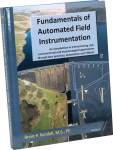
Unlock the power of instrumentation and monitoring with our various geotechnical training options.
Aprender maisVeja alguns exemplos impressionantes que nosso equipamento pode fazer nesta área


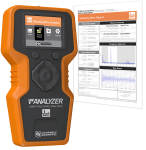
Customize a System
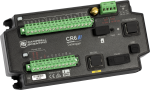
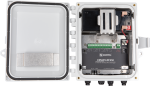
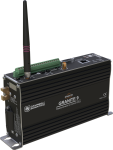
In addition to our standard systems available, many of the systems we provide are customized. Tell us what you need, and we’ll help you configure a system that meets your exact needs.
Mais Detalhes sobre os Nossos Geotechnical Sistemas
Geotechnical Data-Acquisition Systems
The versatility of our data-acquisition systems allows them to be customized for each application. We offer a range of platforms, from the most basic device with just a few channels to expandable platforms that measure hundreds of channels. Scan rates can be programmed from once every few hours to 10,000 times per second, depending on the model. Measurement types, processing algorithms, and recording intervals are also programmable.
The data-acquisition system has a simple, yet powerful on-board instruction set. Simply choose the sensor type, scan rate, and measurement channel. On-board mathematical and statistical processing allows data reduction in the field and enables measurements to be viewed in the desired units, whether that is microstrains, centimeters per second, revolutions per minute, meters, Amperes, or inches.
The versatility of the data-acquisition system extends to control as well. Each platform can monitor and control external devices based on time or measured conditions, allowing savings in time and equipment, and warning of—or possible prevention of—dangerous conditions. These platforms are rugged enough to be used in geotechnical sites worldwide.
The data-acquisition system can stand alone. Once programmed and powered, no human or computer interaction is required, although data are typically downloaded to a PC or exported to the cloud for further analysis. A telecommunications or hardwire link allows data to be monitored and graphed in your office rather than in the field. Data from various stations and applications can be monitored from a single laptop or desktop computer.
The low power drain typically allows our systems to be powered by solar panels and batteries. If 110/220-Vac power or external 12-Vdc batteries are available, you can use those as well. Nonvolatile data storage and a battery-backed clock ensure data capture and integrity.
Training
Campbell Scientific offers training courses that can be conducted at your location and customized to meet your specific needs. Hands-on training with our engineers helps ensure your system provides the site condition data you need today and into the future.
Sensors Used for Geotechnical Measurements
The flexibility of our data-acquisition systems begins with sensor compatibility. Our systems can measure virtually every commercially available sensor, allowing them to be used in different ways for a variety of measurements. For example, the following are common parameters that the sensors in our DAQs measure:
- Pore water pressure
- Water level
- Water flow
- Settlement
- Displacement
- Strain
- Tilt
- Inclination
- Weight
- Force
- Pressure
- Deflection
- Barometric pressure
- Temperature
- Humidity
- Elevation
More specifically, these are the sensor types commonly used in our data-acquisition systems:
- Piezometers
- Pressure transducers
- Inclinometers
- Tiltmeters
- Settlement sensors
- Borehole pressure cells
- Earth pressure cells
- Load cells
- Pressure cells
- Accelerometers
- Vibrating wire strain gauges
- Foil-bonded strain gauges
- Extensometers
- Jointmeters
- Crackmeters
- Strainmeters
- Deformation meters
- Barometers
- Tilt beams
- Stressmeters
- Thermistors
- Thermocouples
- Deformation sensors
- Sonic water-level sensors
- Displacement transducers
- Linear variable differential transformers (LVDT)
Because our data-acquisition systems have many channel types and programmable inputs, all these sensor types can be measured by one device. Channel types include analog (single-ended and differential), pulse counter, switched excitation, continuous analog output, digital I/O, and anti-aliasing filter. Using switched or continuous excitation channels, our platforms provide excitation for ratiometric bridge measurements.
The following are common sensor measurement types that our DAQs are compatible with:
- Frequency
- Resistance
- Voltage
- Ratiometric
- Current
- Modbus RTU
- RS-485
- SDI-12
- RS-232
Communications
The availability of multiple communications options for retrieving, storing, and displaying data also allows systems to be customized to meet your exact needs. Onsite communications options include direct connection to a PC or laptop, PC cards, storage modules, and platform keyboard/display. Telecommunications options include short-haul, telephone (including voice-synthesized and cellular), radio frequency, multidrop, and satellite.
Estudos de Caso
In Nicaragua, hydroelectric power is more than infrastructure. It’s a cornerstone of the country’s energy......Leia mais
The Expressway S19 represents a critical link in Europe’s transportation network, stretching 570 km (354.2......Leia mais
In August 2012, RESPEC was contracted to provide field instrumentation and early-warning monitoring services at......Leia mais
RESPEC, a water-resources consulting and services firm, is currently under contract to operate and maintain......Leia mais